
Search
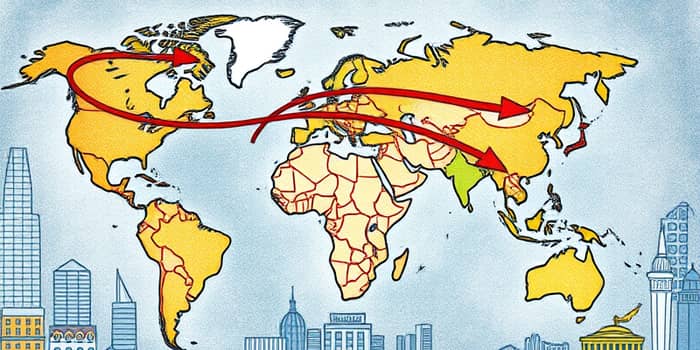
In recent years, international investment patterns have undergone a profound transformation. Traditionally dominated by capital migration toward North America and Europe, cross-border flows now radiate toward dynamic hubs in Asia, India, and the Middle East. This evolution reflects deeper economic realignments and a growing appetite for diversification. Stakeholders around the globe are reassessing strategies, policies, and priorities to remain relevant in an increasingly interconnected and competitive environment.
As policymakers introduce new regulations and interest rate adjustments, investors and governments alike face both opportunities and challenges. Understanding these shifts is essential for harnessing growth, mitigating risk, and fostering resilient economies. This article delves into the key drivers of change, examines emerging trends, and offers practical guidance to navigate a terrain marked by uncertainty and potential.
For decades, Western economies served as the primary engines of global capital flows. However, a seismic shift is underway. A constellation of new financial centers—ranging from Mumbai to Dubai—has emerged, reshaping the global landscape. Rapid growth in regional markets, bolstered by technological innovation and robust infrastructure development, has attracted significant foreign direct investment and portfolio capital.
At the same time, shifting push factors such as aging populations in advanced economies and rising debt burdens have dampened capital export from traditional centers. This combination of pull and push forces accelerates the redistribution of financial power across continents.
Investors must adapt to a more polycentric financial system. By diversifying across geographies and asset classes, they can capture growth opportunities in high-potential regions while balancing exposure to traditional markets. This transition is not merely a redistribution of funds but a redefinition of economic relationships and power structures worldwide.
Government action remains a powerful catalyst for capital mobility. In 2025, central banks are maintaining a delicate balance between containing inflation and spurring growth. The US Federal Reserve has signaled cautious rate cuts amid trade tensions, while the European Central Bank embarks on a measured easing cycle. Switzerland’s possibility of negative rates illustrates the extreme measures policymakers will deploy to counteract deflationary pressures.
Meanwhile, fiscal stimuli, regulatory reforms, and targeted incentives further influence investor sentiment. Renewed tariffs and protectionist measures introduce uncertainty, slowing capital expenditure in certain sectors. At the same time, infrastructure spending plans and tax benefits encourage long-term commitments, especially in real estate and sustainable projects. Identifying these policy vectors enables stakeholders to align their strategies with emerging trends and minimize unintended consequences.
At the core of these developments is increasing domestic policy and governance strength, which anchors investor confidence and shapes long-term capital distribution.
Emerging economies are increasingly attractive due to robust domestic demand, improved transparency, and expanding financial markets. Sovereign wealth funds have shifted focus toward local opportunities, reinforcing supply chains and promoting regional self-sufficiency. Countries such as Saudi Arabia and China are leveraging these vehicles to finance large-scale developments, from renewable energy to advanced manufacturing hubs.
These shifts are underpinned by several “pull factors”:
Combined with push dynamics, this environment highlights emerging markets driving future financial leadership. Navigating these developments requires in-depth local knowledge and a willingness to engage with diverse regulatory environments.
The real estate sector has rebounded as borrowing costs stabilize and deal volumes increase. Investors are targeting markets with clear legal frameworks, high transparency, and strong demographic fundamentals. Logistics properties, data centers, and energy-efficient developments stand out as particularly attractive segments, reflecting global shifts toward e-commerce, digitalization, and sustainability.
Real estate markets in emerging regions benefit from lower construction costs and progressive zoning reforms. Meanwhile, data center developments capitalize on surging demand for cloud services, offering investors an attractive blend of long-term leases and inflation-linked revenues.
Addressing unprecedented infrastructure investment needs by 2050 demands innovative financing structures, cross-border cooperation, and a strong alignment between public policy and private capital. Emerging financial instruments, such as green bonds and sustainability-linked loans, are playing an increasingly vital role in mobilizing resources.
Heightened globalization invites both growth and volatility. While integrated markets foster efficient capital allocation, they also transmit shocks rapidly across borders. Policymakers must balance openness with safeguards to prevent destabilizing flows, particularly in middle-income economies vulnerable to sudden reversals.
Key risks include geopolitical tensions, abrupt regulatory changes, currency volatility, and systemic shocks from climate events or pandemics. To navigate these challenges, stakeholders should prioritize continuous monitoring of policy developments, stress-testing portfolios against adverse scenarios, and strengthening governance frameworks with clear contract enforcement.
Contingency planning and scenario analysis are indispensable. Institutions should establish clear protocols for liquidity management and cross-border fund repatriation to respond swiftly to market turbulence. Cultivating strong diplomatic channels and multilateral partnerships can also provide early warning signals that safeguard investments.
Success in this evolving environment hinges on foresight, flexibility, and collaboration. Investors and policymakers can take the following actions to stay ahead:
By embracing building resilient and adaptable investment strategies, stakeholders can mitigate risks and capitalize on emergent trends. A strategic approach that integrates robust governance, technological innovation, and sustainable finance will be essential in capturing long-term value.
In summary, 2025 promises to be a year of both opportunity and complexity. Investors must remain vigilant and agile, while policymakers should nurture environments that promote stability and innovation. The shift toward a decentralized, multipolar capital landscape underscores the importance of forward-looking policies and strategic cooperation.
Ultimately, those who master the interplay between policy updates and market dynamics will thrive in the coming era of global finance. By fostering inclusive growth and prudent risk management, the global community can ensure that shifting capital flows contribute to sustainable prosperity.
References